Glass splashbacks have become one of the most popular choices for modern kitchens and stylish renovations. They offer a clean, seamless look while protecting walls from heat, steam, and everyday splashes.
Unlike tiled alternatives, glass creates a smooth surface with fewer joins and less visual clutter. Because of that, it can make a kitchen feel more open, brighter, and easier to maintain.
Why glass is a modern favourite
When homeowners choose glass splashbacks, they are often looking for a combination of practicality and design impact. Glass is naturally water-resistant and easy to wipe down, which makes it perfect for busy cooking areas.
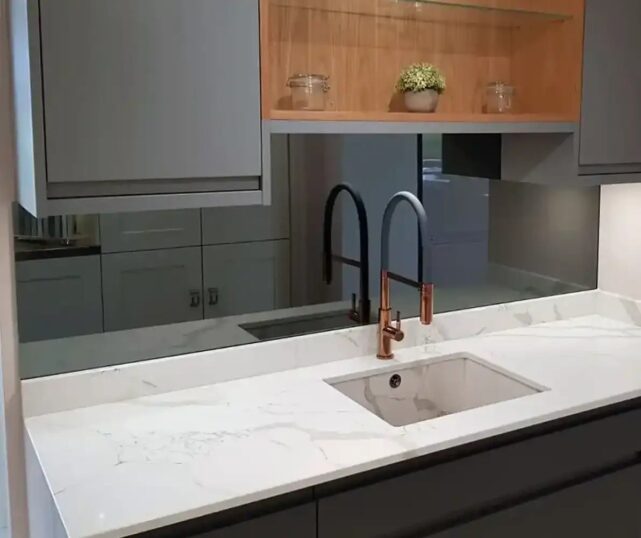
It also reflects both natural and artificial light, helping smaller kitchens feel less cramped. This is especially useful in homes where the kitchen has limited window space.
Another reason glass is so popular is its ability to work with many interior styles. It can look ultra modern in minimalist kitchens, but it can also complement classic spaces when paired with warm tones and traditional cabinetry.
Because it is available in so many colours, textures, and printed finishes, glass offers flexibility that few other materials can match. You can create a subtle background or make the splashback the main feature of the room.
Popular styles and design options

One of the most common choices is a plain coloured glass panel. This style is simple, timeless, and works well with almost any worktop or cabinet colour.
Neutral tones such as white, cream, grey, and soft beige remain the most requested options. They help keep the kitchen bright and also reduce the chance of the splashback looking dated over time.
For a bolder approach, many people choose deep colours like black, navy, forest green, or burgundy. These shades add depth and contrast, especially in kitchens with light cabinets and metallic fittings.
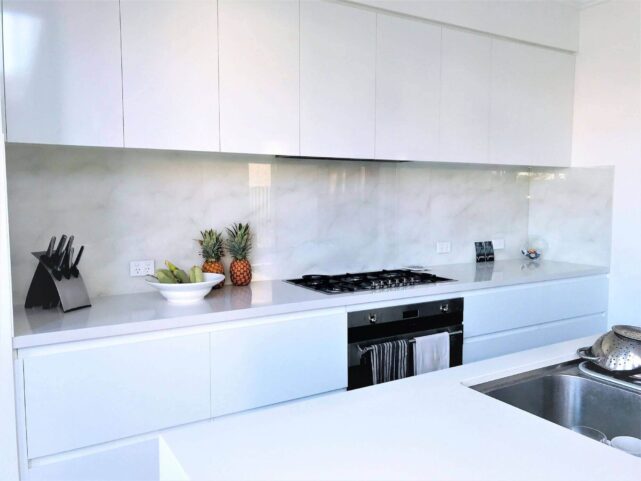
Another increasingly popular option is printed glass that imitates stone, marble, or concrete. This gives the kitchen a luxury look without the maintenance requirements of real natural materials.
Custom printed panels are also available, including patterns, cityscapes, or abstract designs. While this can be visually impressive, it is best to choose a design that will still feel appealing years later.
Finishes, textures, and what to consider
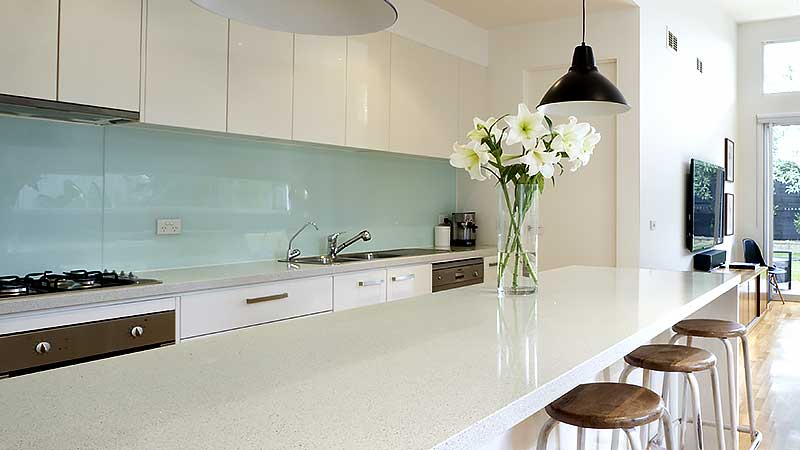
Glass splashbacks come in several finishes, and each one affects both appearance and cleaning. The most common finish is glossy, which provides a sleek look and maximises reflection.
Glossy glass looks striking under under cabinet lighting, but it can show fingerprints more easily. In high traffic kitchens, this means you may wipe it down more often.
Matte finishes are a softer alternative that reduces glare and gives a more subtle, modern feel. They can hide smudges better, although they may not reflect light as strongly as glossy panels.
Textured glass is another option, including frosted or lightly patterned surfaces. These can add depth and interest, but they may take slightly longer to clean compared to smooth panels.
It is also important to consider safety and heat resistance. Glass panels used behind a hob should always be toughened safety glass, and all cutouts for sockets must be completed before toughening.
Conclusion
Glass splashbacks are a stylish and practical upgrade that suits many modern homes. With options ranging from plain colours to printed stone effects, there is a design for every kitchen style.
By choosing the right finish and thinking about light